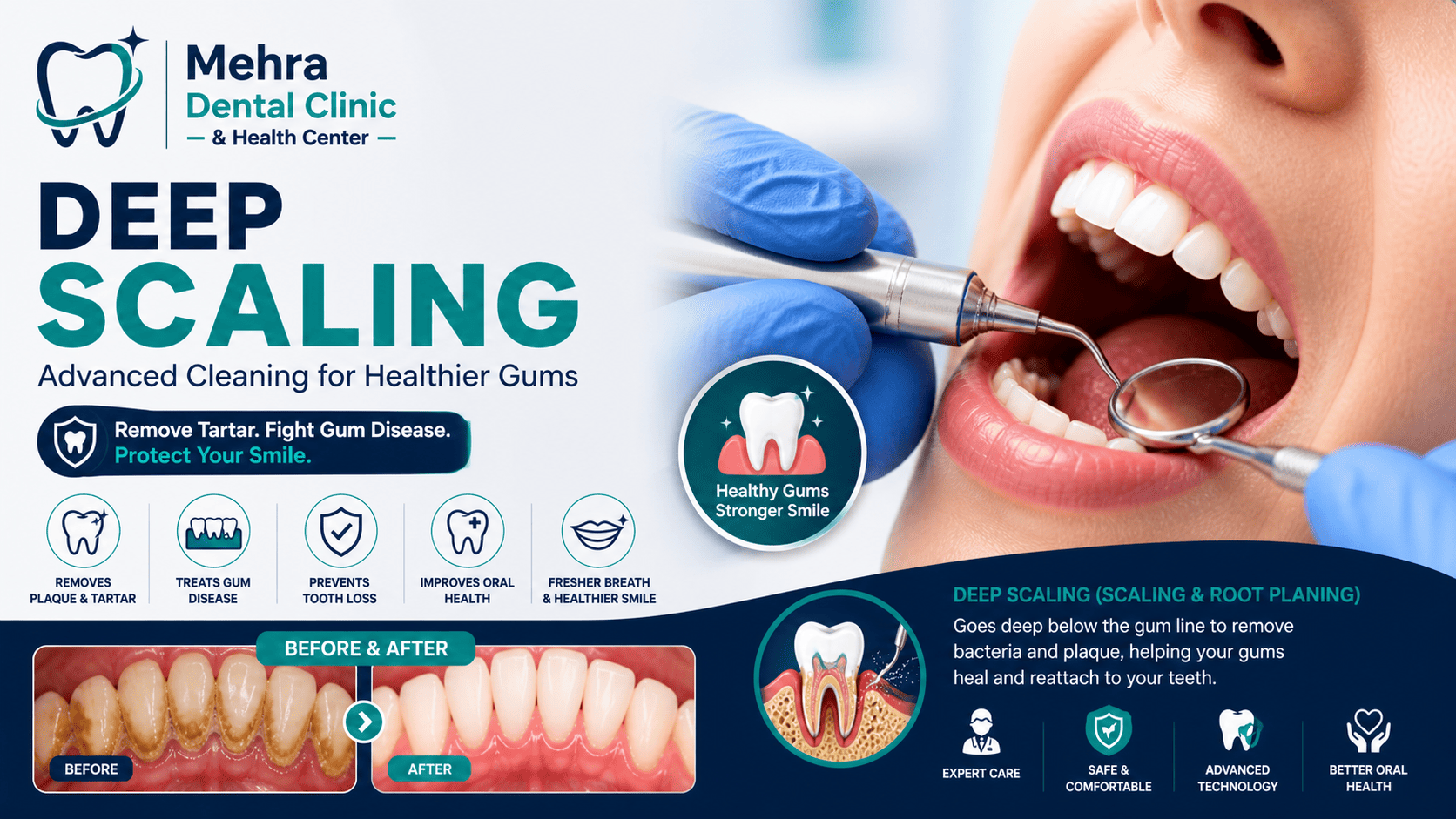
Maintaining good oral hygiene is essential for preventing dental problems, but sometimes regular brushing and cleaning are not enough. When plaque and tartar build up below the gum line, it can lead to gum disease, bleeding gums, and even tooth loss. This is where deep scaling, also known as scaling and root planing, becomes necessary.
Deep scaling is a professional dental procedure designed to clean below the gum line, remove harmful bacteria, and restore gum health. It is one of the most effective treatments for preventing and managing periodontal (gum) disease.
What is Deep Scaling?
Deep scaling is a non-surgical dental procedure that involves removing plaque, tartar, and bacteria from both above and below the gum line. It also includes smoothing the tooth roots (root planing) to help gums reattach to the teeth and prevent further bacterial growth.
Why is Deep Scaling Important?
If plaque is not removed, it hardens into tartar, which cannot be cleaned with regular brushing. This buildup can cause inflammation, infection, and damage to the gums and supporting bone.
- Prevents gum disease progression
- Reduces gum inflammation and bleeding
- Eliminates harmful bacteria
- Protects teeth from loosening or loss
- Improves overall oral health
Signs You May Need Deep Scaling
- Bleeding gums while brushing
- Persistent bad breath
- Swollen or red gums
- Gum recession
- Loose teeth
Procedure of Deep Scaling
The treatment is usually performed in multiple steps:
- Examination of gums and teeth
- Removal of plaque and tartar using ultrasonic tools
- Root planing to smooth tooth surfaces
- Application of medication if needed
Is Deep Scaling Painful?
Deep scaling is generally performed under local anesthesia, making the procedure comfortable. Some patients may experience mild sensitivity afterward, which usually subsides within a few days.
Benefits of Deep Scaling
- Stops progression of gum disease
- Improves gum attachment to teeth
- Reduces bad breath
- Prevents tooth loss
- Enhances overall oral hygiene
Aftercare Tips
- Maintain proper brushing and flossing
- Avoid hard or spicy foods for a few days
- Use prescribed mouthwash
- Attend follow-up dental visits
Deep Scaling vs Regular Cleaning
While regular cleaning removes plaque from the surface of teeth, deep scaling goes further by cleaning below the gum line. It is recommended for patients with gum disease or heavy tartar buildup.
Conclusion
Deep scaling is a highly effective treatment for maintaining healthy gums and preventing serious dental issues. Early intervention can save your teeth and improve your overall oral health.
If you notice symptoms like bleeding gums or bad breath, consult your dentist and consider deep scaling for long-term oral care.
Written by
Dr. S. Nanda