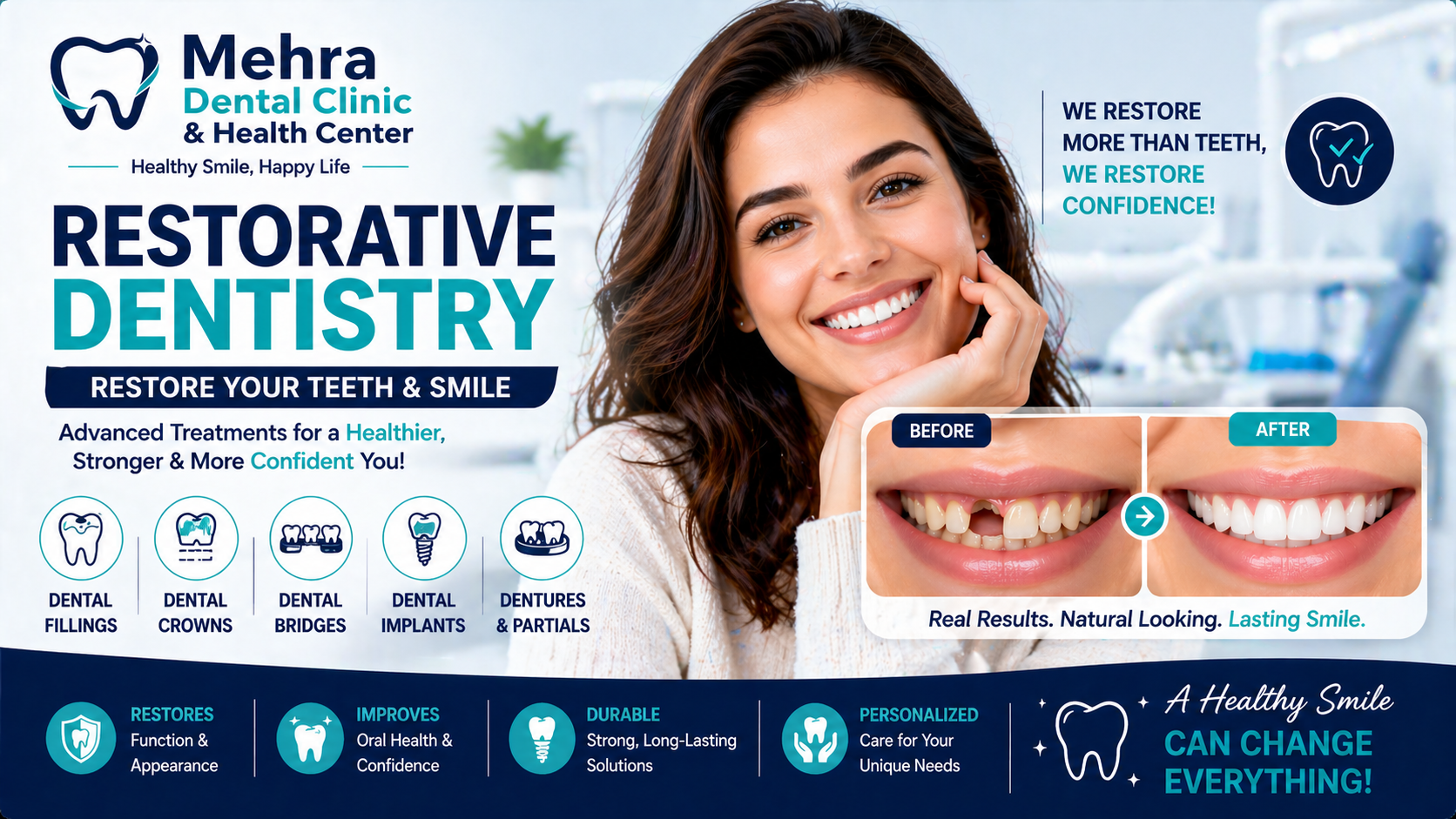
Damaged, decayed, or missing teeth can significantly impact your oral health, confidence, and daily life. Simple tasks like eating, speaking, and smiling may become uncomfortable. Restorative dentistry focuses on repairing and replacing teeth to restore both functionality and aesthetics.
With modern dental advancements, restorative treatments are more effective, durable, and natural-looking than ever before. Whether you have cavities, broken teeth, or missing teeth, restorative dentistry offers comprehensive solutions tailored to your needs.
What is Restorative Dentistry?
Restorative dentistry involves diagnosing and treating dental issues to restore the function and structure of your teeth. It includes procedures that repair damaged teeth or replace missing ones, helping you maintain proper oral health.
Common Restorative Dentistry Treatments
1. Dental Fillings
Fillings are used to treat cavities by removing decayed portions and restoring the tooth with a durable material. Tooth-colored fillings blend seamlessly with your natural teeth.
2. Dental Crowns
Crowns are caps placed over damaged or weakened teeth to restore their shape, strength, and appearance.
3. Dental Bridges
Bridges replace missing teeth by anchoring artificial teeth to adjacent natural teeth or implants.
4. Dental Implants
Implants are permanent solutions for missing teeth. They act as artificial roots and provide strong support for crowns or bridges.
5. Dentures
Dentures are removable appliances used to replace multiple missing teeth, improving both function and appearance.
Benefits of Restorative Dentistry
- Restores normal chewing and speaking ability
- Improves smile aesthetics
- Prevents further dental damage
- Maintains jawbone structure
- Enhances overall oral health
Who Needs Restorative Dentistry?
You may require restorative dental treatments if you have:
- Tooth decay or cavities
- Broken or chipped teeth
- Missing teeth
- Worn-down teeth
- Difficulty chewing or speaking
Why Choose Professional Restorative Dentistry?
Professional dental care ensures accurate diagnosis and effective treatment. Dentists use advanced tools and high-quality materials to provide long-lasting and natural-looking results.
Aftercare Tips
- Maintain proper oral hygiene
- Avoid hard and sticky foods
- Visit your dentist regularly
- Follow post-treatment instructions carefully
Conclusion
Restorative dentistry is essential for maintaining both oral health and confidence. By repairing and replacing damaged teeth, it helps you regain your natural smile and improve your quality of life.
Consult your dentist today and take the first step toward a healthier, restored smile.
Written by
Dr. S. Nanda