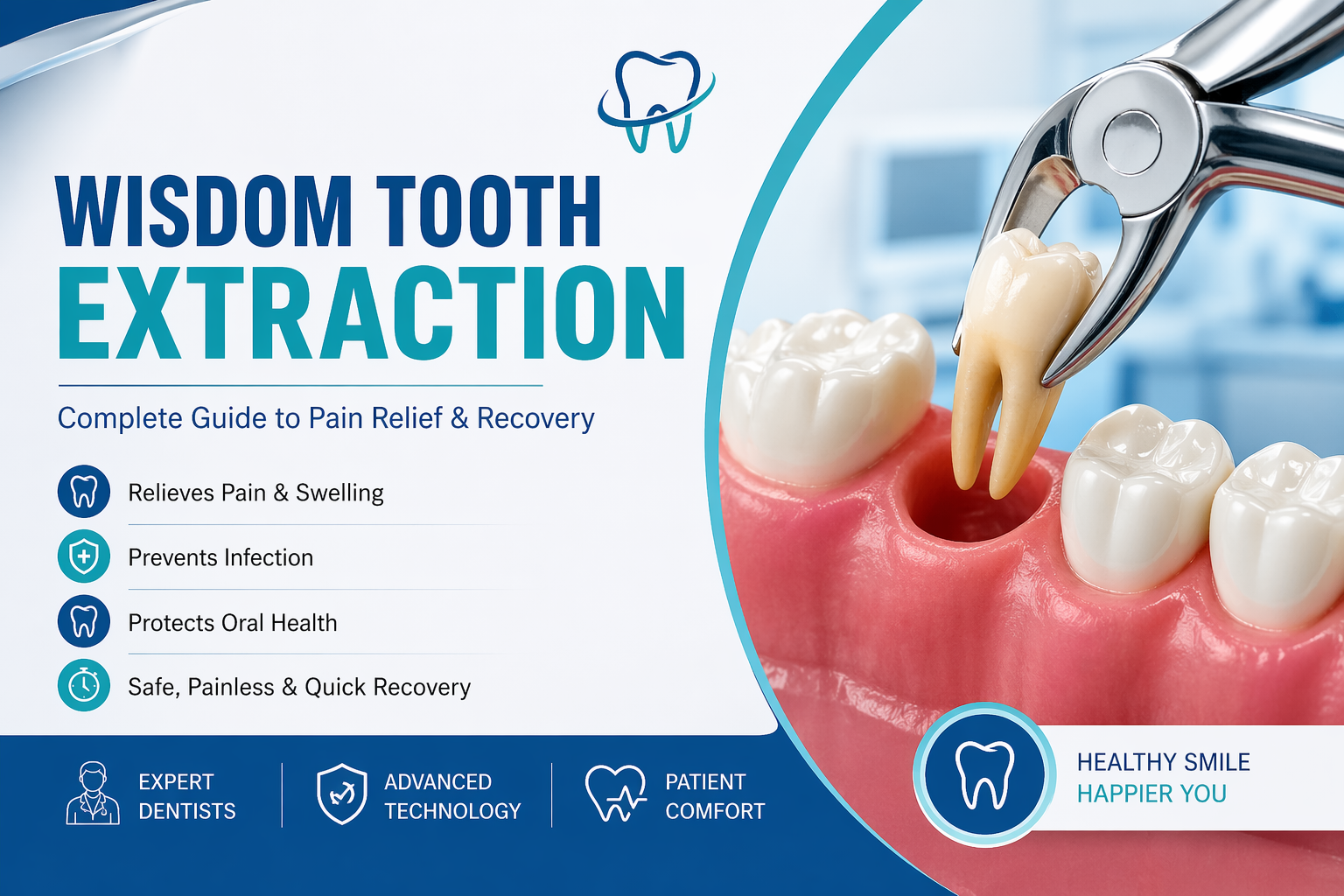
Wisdom tooth extraction is one of the most common dental procedures recommended to prevent pain, infection, and alignment issues. Wisdom teeth, also known as third molars, typically emerge between the ages of 17 and 25. However, due to limited space in the jaw, these teeth often grow improperly, leading to complications that require professional dental care.
If you are experiencing discomfort at the back of your mouth, swelling, or difficulty chewing, your wisdom teeth could be the cause. In this blog, we will cover everything you need to know about wisdom tooth extraction, including symptoms, procedure, benefits, and recovery tips.
What Are Wisdom Teeth?
Wisdom teeth are the last set of molars that develop in the human mouth. While some people have no issues with them, many experience problems due to lack of space, causing the teeth to become impacted or misaligned.
Signs You May Need Wisdom Tooth Extraction
Not everyone requires wisdom tooth removal, but certain symptoms indicate it may be necessary:
- Pain or discomfort in the back of the mouth
- Swelling or redness in the gums
- Difficulty opening the mouth or chewing
- Bad breath or unpleasant taste
- Crowding or shifting of nearby teeth
What is an Impacted Wisdom Tooth?
An impacted wisdom tooth occurs when the tooth does not fully emerge from the gum due to lack of space. It may grow at an angle or remain trapped under the gum or jawbone. Impacted teeth can cause infection, cyst formation, and damage to surrounding teeth if not treated on time.
Wisdom Tooth Extraction Procedure
The extraction procedure begins with a dental examination and X-rays to assess the position of the tooth. Based on the complexity, the dentist will recommend either a simple or surgical extraction.
Local anesthesia is administered to numb the area. In simple cases, the tooth is gently removed using dental instruments. For impacted teeth, a small incision is made in the gum, and the tooth may be divided into smaller sections for easier removal.
The entire process is safe and typically completed within a short duration, depending on the condition of the tooth.
Benefits of Wisdom Tooth Extraction
- Relieves pain and pressure in the jaw
- Prevents infection and gum disease
- Protects nearby teeth from damage
- Improves overall oral hygiene
- Reduces risk of long-term complications
Recovery After Wisdom Tooth Removal
Recovery is usually quick and manageable with proper care. Most patients recover within a few days, while complete healing may take a couple of weeks.
- Apply ice packs to reduce swelling
- Eat soft foods like yogurt, soup, and mashed potatoes
- Avoid smoking and alcohol
- Maintain oral hygiene carefully
- Follow your dentist’s instructions strictly
Common Myths About Wisdom Tooth Extraction
- Myth: Extraction is extremely painful
Fact: Modern techniques ensure a painless experience. - Myth: Everyone must remove wisdom teeth
Fact: Removal is only needed if problems arise. - Myth: Recovery takes a long time
Fact: Most people recover within a week.
When Should You Visit a Dentist?
If you notice persistent pain, swelling, or difficulty eating, it is important to consult a dentist immediately. Early diagnosis can prevent complications and make the treatment easier and faster.
Why Choose Professional Dental Care?
Choosing an experienced dental clinic ensures accurate diagnosis, advanced treatment methods, and a comfortable experience. Professional care reduces risks and ensures faster healing with minimal discomfort.
Conclusion
Wisdom tooth extraction is a safe and effective solution for preventing serious dental issues. With modern dental advancements, the procedure is quick, painless, and highly reliable. If you are facing any symptoms, don’t delay treatment—early care can save you from severe pain and complications.
Book Your Consultation Today
Take the first step toward a healthier smile. Contact your nearest dental clinic and schedule your wisdom tooth consultation today.
Written by
Dr. S. Nanda